"Small-sized biopharmaceutical factory will be leading the trends"
-
기사 스크랩
-
공유
-
댓글
-
클린뷰
-
프린트
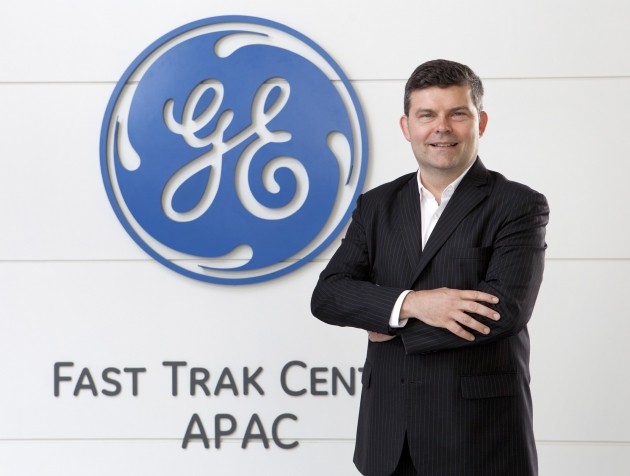
Olivier Loeillot, General Manager, BioProcess at GE Healthcare Life Sciences, said in an interview with the Korea Economic Daily on May 15, where he predicted "the future will be different from today where large-scale biopharmaceutical factories have dominated the market."
It is a contrasting view to the reality where Samsung BioLogics and Celltrion are competing for plant expansion on a large scale.
"The larger the plant, the economies of scale can be achieved, but for biopharmaceutical business, cost saving for production is not so as significant. Going forward, optimized factories will gain attention in consideration of regulatory approval, marketing and distribution costs," he said.
His prediction is based on the fact that there are an increasing number of cases in which small-sized smart factories with low upfront capex and a short construction period are being deployed around the world. Pfizer's $350 million biopharmaceutical plant under construction in Hangzhou, Zhejiang, China is a case in point.

"It is possible to build a plant in 12 months at half the cost of the existing plant. Above all, the proven facilities guarantee production quality and safety. These factories will be built in four locations in China alone until next year," said Mr. Loeillot.
"We expect the number of these factories to increase to 15 by 2025,” adding, “Korea, too, will be able to improve its competitiveness by adopting small-scale local production methods which can complement its current focus on mass production,” Mr. Loeillot added.
Mr. Loeillot who visited Korea on May 13 took a tour of Samsung BioLogics and Celltrion plants in Songdo, Incheon. Both companies are GE Healthcare's largest customers.
"The US and Korea will complete in the global biosimilar market as Samsung and Celltrion are leading the relevant market" he said.
Reporter, Ye-jin JUN ace@hankyung.com

ADVERTISEMENT

-
1
진료 중 환자를 대상으로 성범죄를 저지르거나 1회용 주사기를 재사용하는 등 윤리적 문제를 저지른 의료인에 대한 처벌 기준이 강화된다.보건복지부는 17일부터 새 의료관계 행정처분 규칙을 시행한다고 발표했다. 1회용 주...
-
2
"암세포를 찾아서 없애는 면역 치료, 감염성 간암·위암 치료에 더 효과적"
“한국은 일본과 함께 세계적으로도 간암 환자가 많은 나라로 꼽힙니다. 한국산 B형 간염 백신과 면역항암제가 개발됐을 정도로 치료제 개발도 활발하게 이뤄지고 있죠. 수술이 어려운 환자라도 많은 치료 기회를 ...
-
3
조금만 피곤하면 입안에 염증이 생기고 혓바늘이 돋는 사람들이 있습니다. 입안 점막에 염증이 생기는 질환을 구내염이라고 하는데요. 면역체계에 이상이 생기거나 세균, 바이러스 감염에 의해 발생하는 것으로 알려져 있습니다...
ADVERTISEMENT

![K팝 업계에도 '친환경' 바람…폐기물 되는 앨범은 '골칫거리' [연계소문]](https://img.hankyung.com/photo/202206/99.27464274.3.jpg)