뷰노, 미국 AACN NTI 2025서 DeepCARS 소개 “현지 신속대응팀 큰 호응”
-
기사 스크랩
-
공유
-
댓글
-
클린뷰
-
프린트
환자 안전, 병원 운영 효율 모두에 실질적 기여할 것으로 기대

이번 행사는 미국 중환자 간호학회(AACN)가 주최하는 미 국립 교육원 및 중환자실 박람회(National Teaching Institute & Critical Care Exposition, NTI)로 매년 세계 최대 규모로 열리는 중환자 간호사 대상 교육 컨퍼런스다.
중환자 전문 간호사와 의료진, 병원 관리자 등이 참가해 최신 임상 지식, 치료 기술, 의료기기 및 솔루션을 공유하는 장으로 알려져 있다.
뷰노는 행사 기간동안 전시 부스를 열고 DeepCARS를 소개하며 환자 데이터의 AI 분석을 통한 조기 경고 시스템의 가능성을 제시했고, 병원 신속대응팀(RRT)을 비롯한 현지 임상 전문가들로부터 큰 관심을 받았다.
DeepCARS는 AI 기술을 기반으로 개발된 국내 최초의 일반병동 입원환자 대상 심정지 예측 의료기기다.
환자의 생체 신호(혈압, 심박수, 호흡수, 체온 등)를 분석해 향후 24시간 이내 심정지 발생 위험도를 제공하여 입원환자의 안전관리 및 악화위험환자에 대한 사전조치를 돕는다.
이번 행사에 참석한 뷰노 미국법인 로버트 팅글리(Robert Tingley) VP는 “AACN 회원들과 소통하며 DeepCARS가 환자 안전은 물론 병원의 효율적인 운영에도 실질적 기여를 할 수 있다는 점을 확인했다”며 “미국 임상 전문가들의 임상 환경과 니즈에 대한 피드백을 반영해 곧 현장에서 선보일 수 있기를 기대한다”고 밝혔다.
한편, DeepCARS는 지난 2023년 미국 FDA로부터 BDD(Breakthrough Device Designation; 혁신의료기기) 지정을 받았다.
최근 유럽 CE-MDR 승인을 기반으로 본격적인 유럽 및 중동 시장을 진출을 준비하고 있으며 현재 국내에서는 데모 포함 약 6만2000 병상에서 사용되는 등 필수의료로 자리잡았다.
ADVERTISEMENT

-
1
Vaxcellbio Secures Australian Patent for Core NK Cell Expansion Technology
Hwasun, South Korea - Vaxcellbio (CEO Je-Jung Lee, MD, PhD), a biotechnology company specializing in immuno-oncology, announced on Monday that it has successfully obtained an Australian patent for its core proprietary technology, titled “COMPOSITION CONTAINING FEEDER CELL FOR PROLIFERATING NATURAL KILLER CELL.”This patented technology utilizes feeder cells transduced to express B7H6, CD137L, IL-15, and IL-15Rα genes, enabling the mass expansion of high-purity, highly cytotoxic natural killer (NK) cells. By applying a differentiated feeder cell-based platform, the company has significantly improved cell proliferation speed, purity, and yield, thereby enhancing both the productivity and consistency of NK cell-based therapeutics and achieving stable large-scale manufacturing.Vaxcellbio has sequentially secured this patent in Japan (April 2025), Korea (July 2025), and Australia (October 2025), demonstrating the originality and competitiveness of its NK cell expansion platform across leading biotech markets. Patent examinations are also underway in the United States, Europe, China, Canada, and Hong Kong.CEO Je-Jung Lee said, “The completion of our Australian patent registration, following Korea and Japan, validates the global originality and reliability of Vaxcellbio’s NK cell manufacturing technology,” adding, “Based on this patented core feeder cell technology, we plan to further advance our next-generation CAR (Chimeric Antigen Receptor)-NK cell and gene therapy production platforms and actively pursue global technology licensing and international co-development opportunities.”In addition to this milestone, Vaxcellbio has recently obtained multiple core technology patents related to cell and gene therapies, including BCMA (B-cell Maturation Antigen) CAR-MIL (Marrow-Infiltrating Lymphocyte), MIL culture and activation, and monobody-based CAR technologies. With a total of 16 domestic and international patents, the company continues to strengthen its intel

-
2
Vaxleukin-15 Approved as the World’s First Immunotherapy Adjunct for Canine Lymphoma
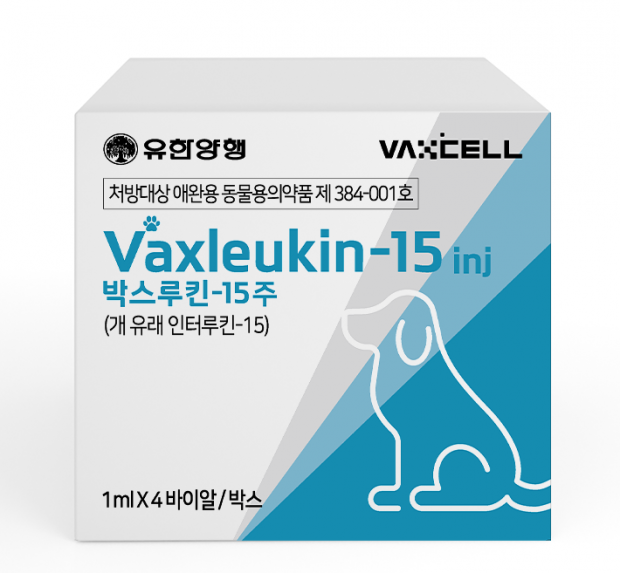
Hwasun, South Korea - Vaxcellbio (CEO Je-Jung Lee), a biotechnology company specializing in immuno-oncology, announced on Wednesday that Vaxleukin-15 has been approved by the Animal and Plant Quarantine Agency as the world’s first immunotherapy adjunct, authorized for use in combination with standard chemotherapy for canine lymphoma. The product’s indication has now been expanded from mammary tumors to lymphoma.Clinical trial results on the concomitant use of Vaxleukin-15 for canine lymphoma were published on May 30, 2025 in the international journal Frontiers in Veterinary Science. After 12 weeks of treatment, the overall response rate (ORR) reached 77.8% in the Vaxleukin-15 combination group, compared with 57.9% in the control group. The disease control rate (DCR) was also higher at 83.3% versus 69.4%. Key oncologic biomarkers—including TK-1, LDH, and β2-microglobulin—showed statistically significant reductions relative to the control, while most adverse events were mild, confirming a favorable safety profile.Currently marketed through Yuhan Corporation as an adjunct immunotherapy for canine mammary tumors, Vaxleukin-15 is expected to create new demand and distribution channels following its expanded indication for lymphoma. Approximately 100 leading veterinary hospitals in Korea—including university animal hospitals—already provide Vaxleukin-15 procedures, and the network continues to grow. Building on this milestone as the first authorized immunotherapy adjunct for canine lymphoma worldwide, Vaxcellbio plans to accelerate its entry into the global companion-animal healthcare market.
-
3
Vaxcellbio’s Dual-Target CAR-T project Selected for the National Cancer Center’s Program
Hwasun, Jeollanam-do, Korea - Vaxcellbio (CEO Je-Jung Lee), a biotechnology company specializing in immuno-oncology, announced on ?? that it has been selected as an institution with a medical research center for clinical research work under the National Cancer Center's program for the “Full-Cycle Technology Development of Immune Cell Gene Therapy” project. The work, with KRW 3 billion out of the program’s total budget of KRW 48.8 billion, will support the clinical entry of chimeric antigen receptor T-cell (CAR-T) therapy.The research project, titled “Translational Research for Clinical Entry of Dual-Targeted PD-L1/EphA2 CAR-T Cell Therapy for Solid Tumors,” will be carried out over 4 years and 6 months in collaboration with Chonnam National University Hwasun Hospital, a designated clinical institution.The primary goal is to advance a dual-target CAR-T immunotherapy into clinical research for patients with solid tumors such as gastric, ovarian, and liver cancers. To achieve this, the consortium will:

ADVERTISEMENT

![K팝 업계에도 '친환경' 바람…폐기물 되는 앨범은 '골칫거리' [연계소문]](https://img.hankyung.com/photo/202206/99.27464274.3.jpg)