

"너만이 완전히 다른 걸 하고 있어" 재즈의 지평을 넓힌 '웨더 리포트'
장르를 초월한 연주
재즈 밴드 웨더 리포트(Weather Report)
창단 멤버 조셉 자비눌 & 웨인 쇼터
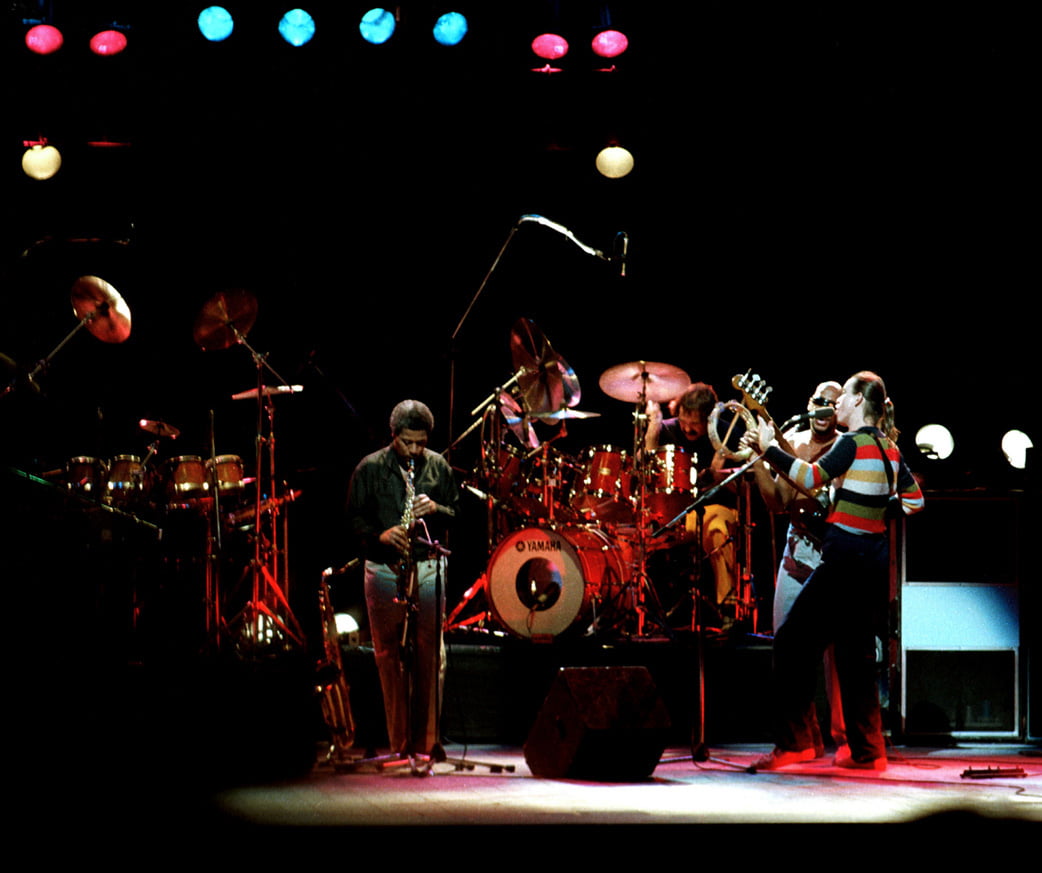
1958년 어느 날 자비눌은 빈에 들어온 몇 안 되는 <DownBeat> 잡지에서 버클리 음악학교(Berklee School of Music) 광고를 보게 됩니다. 그가 신청한 장학금이 받아들여지며, 1959년 1월 2일 보스턴으로 향하기 위해 5일 간 대서양을 횡단하게 됩니다. 보스턴 가는 길에 그가 가지고 있던 것은 버클리 장학 증서와 800달러가 고작이었습니다. 이를 두고 자비눌은 이렇게 회상합니다. “쉽지 않으리라는 것을 알았어요. 미국에 사는 친척도 없고 아는 사람도 없었기 때문이죠. 하지만 그때 이곳 사람들을 제대로 놀라게 해주겠다는 마음을 가졌었습니다.” (관련 기사)

자비눌은 워싱턴의 특기인 전통적 블루스를 흡수하면서, 전자 피아노로 여러 시도를 하게 됩니다. 그는 워싱턴과 19개월을 함께 지냈고, 스윗스 에디슨(Sweets Edison)과 조 윌리엄스(Joe Williams)와 짧은 투어도 갖게 됩니다. 마침내 1961년 가을, 그는 시대를 대표하는 재즈 앙상블 캐넌볼 애덜리 퀸텟(Cannonball Adderley Quintet)과 함께 하자는 연락을 받습니다.
그는 캐넌볼 애덜리 퀜텟에서 10년간 함께 했고, 캐넌볼은 1975년 그가 사망할 때까지 자비눌의 가장 절친한 친구 중 하나로 남았습니다. 자비눌은 이 시기에 일렉트릭 피아노로 연주한 ‘Mercy, Mercy, Mercy’를 작곡하여 그의 첫 히트곡을 내놓습니다. 캐넌볼은 자비눌의 곡 중 50곡 이상을 녹음했고, 자비눌은 자신의 이름으로 된 앨범인 ‘Money in the Pocket’(1965)과 ‘The Rise and Fall of the Third Stream’(1966)을 발매합니다. 자비눌의 일렉트릭 피아노 연주를 마일스 데이비스(Miles Davis)가 듣게 되었고, 1968~69년 겨울 자비눌은 ‘In A Silent Way’ 녹음 세션에 초청되었습니다. 이 앨범의 메인 곡의 제목은 자비눌이 작곡한 곡과 동일합니다.
메이너드 퍼거슨과 함께하던 시절, 자비눌은 밴드 오디션에서 테너 색소폰 연주자인 웨인 쇼터(Wayne Shorter)를 만나게 됩니다. 자비눌이 마일스 데이비스와 녹음하던 시기, 쇼터 역시 데이비스와 작업하던 주요 색소폰 연주자였습니다. 자비눌은 몇 년 전 마일스 데이비스의 앨범 ‘Nefertiti’를 처음 듣고 언젠간 쇼터와 함께 하게 될 것이라는 예감을 가졌다면서, 쇼터에게 자신들만의 그룹을 만들자고 이야기하기 시작했습니다.

이들의 첫 앨범은 많은 기대 속에 발매되었고, 이들의 나아갈 길이 밝다는 것을 보여주었습니다. 웨더 리포트의 초창기 음악에는 자비눌과 쇼터가 마일스 데이비스와 작업했던 ‘Bitches Brew’에서 처음 시도했던 실험이 엿보이며, 전통적인 헤드-코러스 구성 대신 연속적인 리듬과 움직임을 추구하는 작곡 스타일이 드러납니다.
웨더 리포트의 등장은 신시사이저가 공연에서 주요한 악기로 쓰이기 시작한 시기와 맞물립니다. 악기 제작사들은 꽤 크고 무거웠던 일렉트릭 악기의 크기를 줄이게 되었고, 덕분에 이전보다 훨씬 쉽게 사용할 수 있게 되었습니다. 자비눌은 1971년 Arp Instruments로부터 앞으로 그가 본격적으로 사용할 첫 신시사이저인 Arp 2600을 받게 되었는데, Arp Instruments는 시장에서 견고하게 자리잡고 있던 경쟁사 Moog Music과의 경쟁 구도에서 회사의 인지도를 높이고자 했습니다.
자비눌의 오케스트레이션 능력과 독창적인 신시사이저 연주는 쇼터의 뛰어난 작곡 능력과 만나 재즈의 새로운 장을 열었습니다. 휴대용 테이프 레코더와 MIDI 같은 기술적 혁신은 작곡과 녹음의 유연성을 더 넓혔는데요. 자비눌은 즉흥 연주를 보다 정확하게 녹음하기 위해 테이프 레코더를 사용했고, 녹음한 것을 기반으로 악보를 만들어 연주자가 자비눌의 구상대로 연주할 수 있도록 했습니다. 이런 새로운 작업 방식과 아이디어는 ‘어떻게 살아가고, 어떻게 음악을 만들 것인가’라는 하나의 지점으로 이어집니다. 자비눌은 마일스 데이비스와의 작업을 두고 “음악 그 자체에 집중하지 않았다”며 “음악은 어떤 것들의 결과지, 그 자체가 목적은 아니다”라고 말한 바 있습니다.

자비눌은 음악에서 다른 것을 추구했습니다. “나는 스탠다드 형태의 재즈에 지루해졌어요. 그러니까 A-A-B-B 형식과 코드 변화 말이에요. 색소폰, 트럼펫, 베이스 솔로, 그다음 드럼, 그리고 다시 멜로디… 수년 동안 하다 보니 정말 지겨워졌습니다. 그래서 음악을 바꾸기 시작했고 훌륭한 뮤지션들과 변화의 문을 완전히 열어놓았어요. 어느 토요일 아침 델로니어스 몽크와 디지 길레스피가 집에 찾아왔는데, 몽크가 제 곡 하나를 듣더니 이렇게 말했어요. ‘이봐, 너 지금 뭐 하고 있는 거야? 정말 좋은데? 너만이 뭔가 다른 걸 하고 있어’라고 말이죠.” (관련 기사)
자비눌에게 음악은 이야기이며, 각 이야기는 서로 다릅니다. 그에게 있어 이야기에서 가장 중요한 것은 ‘어떻게 전하는가’입니다. 자비눌에게 있어 웨더 리포트는 새로운 이야기를 다른 방식과 맥락으로 전하는 수단이었던 것이죠.
웨더 리포트는 첫 두 앨범 이후 점점 더 재즈 펑크의 영향을 받기 시작했고, 그루브에 좀 더 초점을 맞췄습니다. 그들은 R&B를 좀 더 반영하고, 전자 키보드 파트를 레이어 쌓았으며, 작곡된 부분과 즉흥 연주하는 부분에 더 많은 구조를 넣었습니다. 이 시기 웨더 리포트는 드러머를 지속적으로 교체하기 시작했는데, 자비눌과 쇼터가 밴드가 가진 소리에 대해 가진 생각이 계속해서 진화했기 때문입니다. 드러머는 밴드 사운드의 성격을 정의하는 데 핵심적인 역할을 하기 때문에, 자비눌과 쇼터의 구상이 변화하면 드러머 역시 교체되곤 했습니다.
드럼 연주 방식이 작곡 스타일과 함께 어떻게 변화하는지를 보여주는 좋은 예시를 다음 두 곡을 통해 보여드리겠습니다. 드러머에 따라 음악의 흐름과 밴드 사운드가 완전히 다릅니다.
웨더 리포트의 드러머는 처음에 에릭 그래밧으로 시작하여 그렉 에리코, 이슈마엘 윌번으로 이어졌습니다. 그중 윌번의 베이스 드럼 사운드는 쇼터와 자비눌 모두 좋아했습니다. 이들은 이렇게 신선하면서도 덜 알려진 드러머를 찾게 됩니다. 이후 대릴 브라운, 채스터 톰슨, 알렉스 아쿠냐, 피터 어스킨 , 오마 하킴이 그 뒤를 이었습니다.
1976년에는 현대 재즈 역사상 가장 유명한 일렉트릭 베이시스트 중 한 명으로, 엄청난 기교와 독특한 베이스 사운드로 잘 알려진 자코 파스토리우스(Jaco Pastorius)가 웨더 리포트에 합류합니다. 덕분에 웨더 리포트는 새로운 찬사를 받으며 더욱 큰 인기를 얻게 됩니다. 이들은 당대 가장 인기있는 재즈 밴드가 되었고, <DownBeat>의 독자를 대상으로 한 투표에서 당시 활동하는 밴드 중 최고의 재즈 밴드·일렉트릭 재즈 콤보 부문 1위를 연달아 차지했습니다.
특히 앨범 ‘Heavy Weather’를 통해 웨더 리포트는 콘서트와 티켓 판매 면에서 록 스타급의 인지도를 얻게 됩니다. 이들의 사운드는 더 웅장하고 강력해졌으며, 빅밴드처럼 강렬한 파워를 가지게 되었고, 이들의 무대 퍼포먼스는 다른 어떤 재즈 그룹보다 관객을 흥분시켰습니다. 이 시기의 가장 대표적인 곡은 자비눌의 ‘Birdland’로, 아마 웨더 리포트의 가장 유명한 곡일 것입니다.
총 열여섯 장의 앨범을 녹음한 후 웨더 리포트는 1984년 10월 3일 일본 야마나시에서 마지막 콘서트를 끝으로, 서로 다른 꿈을 위해 각자의 길을 걷기 시작합니다. 오늘날까지도 웨더 리포트는 재즈 역사상 가장 사랑받는 그룹 중 하나로 남아있습니다.
론 브랜튼 재즈 피아니스트·작곡가
<칼럼 원문> Weather Report – Sunny Jazz with many changes
One of the most compelling groups that has transcended genres and is still jazz is Weather Report. When we think of the group Weather Report, we should realize that Weather Report really is a story about the two main founders, Josef Zawinul and Wayne Shorter. For this article, I would like to focus more upon the co-founder who played a more intensive role in running the group, namely Josef Zawinual.
Josef Zawinul is originally from Vienna, Austria. He started with Accordion and when he was six or seven, he studied clarinet, violin, and piano at the Vienna Conservatory. Zawinul first heard jazz when a fellow student performed an impromptu version “Honeysuckle Rose” during a stay in the Czech Republic during WWII. He continued classical piano training while earning money by playing accordion in small combos. After the war, Vienna was occupied by the Allied powers, and Joe began performing at clubs on American military bases, where his lifelong fascination with sound was spurred by access to a Hammond organ. He noticed in an advertisement one day (1958), in one of the few copies of DownBeat magazine to reach Vienna, an ad for the Berklee School of Music in Boston. Joe applied for a scholarship and was accepted, and on January 2, 1959, he boarded a boat for the five-day journey across the Atlantic Ocean. He carried with him his Berklee scholarship and $800. “I knew that it wouldn’t be easy,” he once recalled, “because I had no relatives, didn’t know a single person in America, but when I came over on the boat, I did it with the purpose to kick asses.”
Soon after starting at Berklee, Joe had a fortuitous audition with trumpeter Maynard Ferguson and was accepted as Ferguson's newest member. Zawinul stayed for eight months, playing on Ferguson's highly regarded live album, A Night at Birdland, before getting hired by the popular jazz and blues singer Dinah Washington. Zawinul continued to absorb what he could in the blues tradition that was Washington's domain and during this period began to experiment with the electric piano. Zawinul stayed with Washington for 19 months and then toured briefly with Sweets Edison and Joe Williams. Finally, in the fall of 1961, he received the call to join the Cannonball Adderley Quintet, one of the greatest Jazz ensembles of its era. He stayed with Cannonball for ten years. During his time with Cannonball, who remained one of his greatest friends until his death in 1975. Zawinul wrote his first hit "Mercy, Mercy, Mercy" during this time, performing it on the electric piano. Cannonball ended up recording over fifty of Joe’s tunes and Zawinul also managed to record two albums under his own name, Money In the Pocket (1965) and The Rise and Fall Of The Third Stream (1966). Zawinul's use of the electric piano also caught the ear of Miles Davis and subsequently, in the winter of 1968-69, he invited Joe to the recording sessions that produced the important album In A Silent Way, the centerpiece of which was Joe’s song of the same name.
During his tenure with Maynard Ferguson, Zawinul met a young tenor saxophonist who had auditioned for the band as well – Wayne Shorter. During the time Zawinul was spending time with Davis to record, Shorter was also the principle saxophonist for Davis. Zawinul began talking to Shorter about forming their own group. He earlier had a premonition that he would form a group with Shorter when he first heard the Miles Davis album Nefertiti a few years earlier. Joe recorded his third album (1970), Zawinul, which DownBeat described as “the work of a complete musician who has transcended categories and is certain to have a profound influence on the direction music will take in the ‘70s.” It was later that year that Zawinul formed Weather Report with Shorter. Their first album was highly anticipated and proved to be a positive sign of the years ahead for the group. The early Weather Report music developed from the experiments which Zawinul and Shorter had first developed with Miles Davis on Bitches Brew, including a style of writing that avoided head-and-chorus composition in favor of continuous rhythm and movement.
Weather Report's advent coincided with the development of the synthesizer as a main instrument in performance. Instrument makers had finally been able to reduce the size of electronic instruments to the point of where they could be used with greater ease than the earlier versions which were quite bulky and heavy. Zawinul got his first serious synthesizer in 1971 – an Arp 2600 – given to him by Arp Instruments which hoped to raise the company’s profile as it competed with its more entrenched competitor, Moog Music. Zawinul's ability to orchestrate and his unique way of working with synthesizers, in addition to Shorter's accomplished writing, lead to fertile new territory in Jazz. Technical innovations such as the portable tape recorder and the use of MIDI for handling music data lead to even greater flexibility in writing and recording. Zawinul used his tape recorder to more accurately capture his improvisations, enabling him to write out parts so that the music could be played as Zawinul originally conceived it. All of these new ideas and ways of working all lead to the same place: how to live and make music. As Zawinul once observed regarding his work with Miles Davis "We didn’t pay that much attention to music itself. Music is the result of things. It’s not the thing itself." As a leader, Zawinul was demanding, "when I play alone, things are so clear and I want clarity in expression. I want to tell a story and when you tell a story and then you have to tell it with other people, it's very important that there is great discipline." Zawinul wanted to pursue something different in his music making, "I was tired of the standard form of jazz—you know, the A-A-B-B and the changes. I was fed up with that. Sax, trumpet, bass solo, then drums, and back to the melody—that bored the shit out of me after years of doing it. That’s when I started changing my music and totally opened it up with a lot of great musicians. Thelonious Monk and Dizzy Gillespie came to my house one Saturday morning and Monk heard one of my tunes and said “Man, what are you doing? I really like that! You’re the only one doing different things.” For Zawinul, music is storytelling and each story is different and for him, the important part of telling a story is how one tells the story. For Zawinul, Weather Report was a way to tell new stories in a different way and context.
Weather Report became more influenced by jazz funk, focusing more on a groove after the first two albums. They drew more upon R&B influences and layered electric keyboard parts while adding more structure to both the prewritten and the improvisational sections. It was during this time that Weather Report began a steady change in drummers, reflecting a continuous change in Zawinul's and Shorter's ideas of what the group should sound like. The drummer plays a key part in defining a group's sound and thus their drummers kept changing as Zawinul and Shorter's ideas kept evolving. A good example of how the drumming changed with the style of writing can be found in "Waterfall", with Alphonse Mouzon on drums (see: https://www.youtube.com/watch?v=-7hIPu0Cusg ) compared with Alex Acuna on "Cannonball": (see: https://www.youtube.com/watch?v=Xx9Y_uU0d2c ). The approach to musical flow, kit and group sound are totally different. The group started with Eric Gravatt and then moved on to such drummers as Greg Errico (Sly and the Family Stone), Ishmael Wilburn, who both Shorter and Zawinul liked because of his bass drum sound, thus taking on the fresh unknown drummer. Later there was Darryl Brown, Chester Thompson (1975), Alex Acuña (1976), Peter Erskine (1978-83), Omar Hakim (1984).
One of the most famous modern bassists, Jaco Pastorious, known for his incredibly virtuosic abilities and unique sound on electric bass, joined in 1976 and during this period Weather Report gained new accolades for their music. Weather Report became the most popular jazz band of its time, winning the DownBeat readers poll as best jazz band or electric jazz combo every year of its existence and with the album Heavy Weather, they gained an almost rock star status in their concerts and ticket sales. The sound became more massive and powerful, having the same punch as a big band and their stage presence excited crowds unlike any other Jazz group. The most famous example of this period can be found in the Zawinul tune "Birdland" which may be their most famous tune.
Having recorded a total of sixteen albums, Weather Report's last concert was on October 3, 1984 at Yamanashi, Japan, whereupon Zawinul and Shorter went their respective ways to pursue other projects. To this day, Weather Report is still one of the most beloved groups to ever have performed in the Jazz idiom.
ⓒ 한경닷컴, 무단전재 및 재배포 금지
ADVERTISEMENT

-
1
2019년 11월 독일 함부르크에서는 실험적인 음악 프로젝트가 진행됐다. 세계적으로 유명한 광고기획사 ‘융 폰 마트(Jung von Matt)’가 기후위기 인식 캠페인의 일환으로 기획한 프로젝트...
2025.08.15 10:28
-
2
광복 80년에 다시 듣는 김순남…터지는 함성, 현대음악이 되다
1945년 8월 15일, 80년 전 해방의 순간은 알아듣기 힘든 소리와 함께 왔다. “친 후카쿠 세카이노 타이세이토(朕深ク世界ノ大勢ト)…”. 일왕(日王) 히로히토(裕仁)가 ...
2025.08.13 16:00

-
3
단지 예쁘다는 이유만으로 사고 싶은 물건들도 있다. 기능마저 갖추고 있다면 금상첨화다. 나에게 그런 물건 다섯 가지를 꼽으라고 한다면 모카포트(Moka Pot)는 무조건 포함된다. 일단 직선 위주에 양념처럼 곡선이 ...
2025.08.13 15:01
ADVERTISEMENT